
When my wealthy parents told me I had to get married or lose my inheritance, I made an unusual proposal to a waitress.
But on our wedding night, she handed me an old photograph that changed everything I believed about my family, her family, and what love truly means.
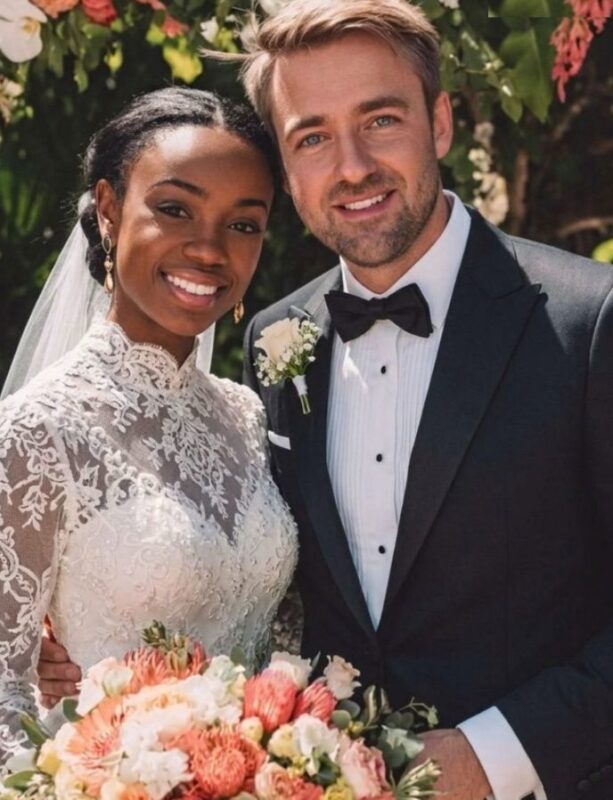
When we arrived home after the wedding, Claire didn’t even kiss me or properly step inside. Instead, she stood in the doorway, nervously clutching her handbag.
“Adam… before anything else happens, promise me something,” she said quietly.
A strange feeling crept over me. Even though our marriage was only an arrangement, I hadn’t expected any surprises.
“Anything,” I replied.
She hesitated and forced a small smile. “No matter what you’re about to see, please don’t scream… at least not before I’ve explained it.”
That night—the night that was supposed to change my life—I suddenly wasn’t sure whether I was about to hear her story or discover something about my own.
My life had always been tightly controlled. I grew up in a huge marble villa where everything felt cold and perfectly arranged.
My father, Richard, ran his business life with ruthless precision—even at home. My mother, Diana, cared mainly about appearances: white furniture, quiet rooms, and a life that looked flawless on social media.
As their only child, I was treated less like a son and more like a future investment.
From an early age, my parents quietly steered my life toward one goal: marrying the “right” woman. At every social event, my mother’s friends would parade their daughters in front of me—well-groomed, polite, and clearly prepared to marry into wealth.
Then my father set the final condition on my thirtieth birthday.
“If you are not married by thirty-one,” he said calmly at dinner, “you’ll be cut out of the will.”
There was no discussion, no anger—just the same cold certainty with which he conducted business.
Suddenly, my life had a deadline.
After weeks of uncomfortable dates with women who seemed more interested in my last name than in me, I went one evening to a small café downtown. That’s where I met Claire.
She was a waitress, joked with the guests, remembered orders without writing them down, and treated everyone with warmth. There was something about her that felt genuine—something I hadn’t experienced in a long time.
So I made her an offer.
I explained my parents’ ultimatum and proposed a deal: we would marry for a year. It would be only a legal marriage on paper—with no obligations. In return, I would pay her well. After a year, we would quietly get divorced.
Claire thought it over carefully, asked about contracts, and finally agreed.
My chest tightened as the memories came flooding back.
Later, I learned the truth: my mother had eventually found the bracelet she had accused Martha of stealing—but she never admitted her mistake. Martha’s reputation was ruined, and she lost her job and her security.
Claire hadn’t agreed to the marriage just because of the money.
She wanted to see whether the lonely boy her mother had once cared for had grown into a good man—or whether he had become someone like his parents.
The next day, Claire and I confronted my parents at the country club. In front of everyone present, the truth came to light—the false accusation my mother had made, the injustice Martha had suffered—everything.
For the first time in my life, I stood up to them.
I walked away from their money—and from their expectations.
Later, as Claire and I walked home, she gave me a cookie made from her mother’s recipe. In that moment, I understood something Martha had known all along:
Love had never been in my parents’ wealth.
It had always been in the kindness of the people they looked down on.